Friday, 15 March 2013

Game of Pharaohs


A cold desert wind blows through the halls. Columns and paintings that are bright and shining in the day light cast long shadows. Blackened doorways gape, the many jaws of an enormous stone beast, waiting to devour passersby. A jackel screams in the sand, it is answered. Soon the dunes, glowing silver in the moonlight echo with childlike screeches. A man shivers, not from the cold or the screams. The king is dead and a great time of change has come.
                 
Nine years have passed. The sun shines bright on the alabaster pillars of the royal city, restored now after seventeen long years. The man from the desert night waits patiently for his pharaoh to finish his speech. The man does not listen, he has heard it before, he wrote it. The pharaoh is just a boy, a royal boy with the spark of the gods within him but a boy none the less. If it were not for the man this boy would be dead and buried, lost to the sands. It was Aye that had brought the capital back to Thebes, Aye that cast out the heathen priests and restored the Old Gods to their positions of glory. This boy was nothing but a pup. But he was necessary. Aye could never rule alone, the people would not follow him, he was not of the divine blood line. Rich as he was, the royals could still spit on him and expect him to thank them for the favour.
                
 “… And the time has come to bring my father home from Amarna to be buried here in honour befitting a divine Pharoah.” Aye coughed in surprise, momentarily losing his composure. That was not part of the speech he had written. The room erupted in applause and the Pharoah left the rest of the business to his advisors. Aye followed him out. Waiting to be acknowledged. The Pharaoh retired to his bed chambers, attended by a cadre of slaves wielding fans and refreshments and did not recognize Aye’s presence until he was comfortably reposed on his expansive bed. “Ah my beloved advisor. What do you have to say me?”
                
 “Pardon my intrusion Pharoah, I was intrigued by your choice to recover your father.” Aye kept his eyes on the ground, his bowed.
                 
The Pharaoh popped a date into his mouth and chewed, savouring the sweetness. “Oh, and what about it seemed so intriguing. He deserves to be buried with our ancestors, remembered in glory until the day of his ascension.”
                 
“Yes of course Pharaoh, but perhaps this is not the best time. The cult of Aten still has its followers and the people have endured so much change already. Perhaps we could post-pone this until a better time?”
                 
The Pharaoh rose from his bed and slaves scurried to attend him, he swatted them away roughly. “You dare to question me Aye? I am Pharaoh and my word is truth. I want my father returned to me and I want it now.” Aye backed away in fear, he had never seen the Pharaoh this way before, he had always been so suggestable, so tractable. This new self-possession did not bode well for Aye.
                 
“No my Pharaoh, I do not mean to question you… I… I merely…..” He was cut off by a strike across the face that left him dazed.
                
 “You merely nothing. This is my will and you will carry it out. Am I understood?” His eyes were blazing, cheeks flushed and sweat beaded his forehead. He was breathing heavily and Aye could see he would collapse. The Pharaoh was not in good health, an affliction of the blood claimed the healers and the priests but they offered no cures.
                 
The slaves returned as the colour drained from the Pharaoh’s cheeks and his legs began to tremble. “Yes Pharaoh, your will is truth. I will obey.” Aye responded out of tradition but the Pharaoh did not hear him, he had collapsed into the arms of his waiting slaves and was already being born to his bed once again. Aye backed out of the room, eyes always on the ground, head bowed and he was careful not to turn until the doors had swung shut. Then he straightened, an angry glint in his eye. ‘This insolent pup will learn not to cross me.’ He thought. ‘If he wants his father close, it is my duty to grant that wish, he can join him in the other world and they can worship their heathen god once more.

Ok so I hope you enjoyed my foray into the realm of historical fiction. It was really to illustrate a point.

We can only go so far with what the archaeology tells us. DNA is a fantastic tool for determing kinship, grave goods can tell us about status and wealth. The investment in the burial and form of funerary practice can tell us about how important the person was in their world. But what about the stories, what about the lives of these people? Historical texts can tell us somethings but the narratives are left up to writers (usually ones far more adept than I).

This narratives are not bad things. They inspire interest in archaeology and some are even acurate. I myself am an avid reader of historical fiction. However, the word "fiction" needs to be paramount in our understanding. These are stories and should never be confused with archaeology. The facts few and far between and these stories are interpretations at best. 

Yay 10th blog post done

Tuesday, 5 March 2013

Publish or Perish

Been a while since I posted but I am back again and this time I have a bit of a bone to pick (shocker I know.

                                          Neanderthal Family

This week of lectures has been focussed on life-course and life history and these can be determined through the archaeological record. To facilitate discussion on this topic we were assigned a reading that explore the life history of Neanderthals. This is where the trouble begins.

I am first and foremost a paleoanthropologist and though I prefer looking at fossilized faunal remains hominins are a bit of hobby of mine and Neanderthals happen to be my second favourite (if it were not for the intriguing feet of Ardipithecus ramidus they would be number 1).

The article (by P. B. Pettitt in 2000) is by and large an excellent summation and analysis of the stages of stress incurred by Neanderthals across their entire geographic range, from France to Israel and even as far as Iraq and Siberia. However I do have two primary problems with this article and both of them pertain to the other making unfounded leaps for the sake of making an original and intriguing argument.

1)They take fossil remains from several different sites and time periods and include them in the same sample as a means of reconstructing a generalized Neanderthal life-course. Even if we assume that Neanderthals had little or no culture (which is untrue) the climatic variability inherent in the different regions would be enough to make inclusion into a single general class completely unfeasible. Unfortunately the paucity of Neanderthal remains (even though they are the most prolific hominin in terms of amount of material recovered) means that a large enough sample from a single site or region is unlikely to ever be compiled.

2)The intuitive leaps made by the author are imaginative but ultimately unfounded. For example Pettitt postulates that physical trauma, usefulness in the group and mobility are key components of the Neanderthal life course (Pettitt 2000: 361). This in itself is not an unreasonable claim, Neanderthal skeletons do display a great deal of trauma and are often compared to modern rodeo riders in terms of breakage patterns. The author does not stop there however and goes on to suggest that before weaning infants have no measurable use in the group and are therefore avoided by all but the mothers (Pettitt 2000: 359) until they go through some sort of rite of passage and become productive members of the community. To support this claim Pettitt sites two instances of infant remains being found in midden heaps. Two instances of anything is not enough to make these sort of grand statements.
                                          There is no purpose for this picture I just really like it.

The temptation to make grand statements is strong in this ego-driven field and I feel as though Pettitt has given into this temptation.

I recognize that I am being somewhat knit-picky here and it is probably due to my partiality towards Neanderthals. Were this a modern human population I might be more willing to appreciate this claims. But never the less this article left me questioning the validity of the interpretations we (as archaeologists) are forced to come to in order to hold the attention of the public and other academics in this climate of publish or perish.

Source:
Pettitt P.B. (2000). "Neanderthal Lifecycles: Developmental and Social Phases in the Lives of the Last Archaics." World Archaeology 31(3):351-366. 

Images:
http://www.livescience.com/9245-neanderthals-similar-life-spans-modern-humans.html


Thursday, 21 February 2013

The Ways We Remember

O.K. real short post this week,

I came across this video several weeks ago but I had a plethora of blog ideas at the time so I let it slip my mind. I know that this is something of a repeat of a previous blog post but it is a really interesting video and I strongly recommend that you watch the rest of the videos on the channel. Discussing Jeremy Bentham and mummies in class before reading break also brought this video to mind. Enjoy.


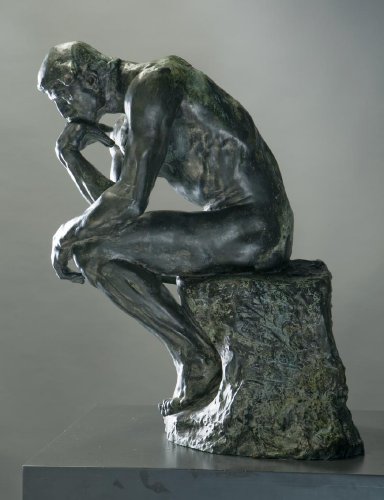
This video is really an excellent re-cap of all the different methods people have of treating the dead. The freeze drying and taxidermy methods were particularly interesting to me and he gives an excellent overview of plastination. The idea of being taxidermied into a position like a permanent high five, while morbid, seems awesome to me. Though I think I would want to be in the position of Rodin's Thinker.


I just can't quite get enough of this subject. The amount of things that you can do with remains is staggering and fascinating. Alas, the legal systems that be don't always allow for this sort of creativity. The end of the video covers the legal issues with these alternative methods of treating the dead and he does a much better job of discussing these issues than I ever could. Seriously watch the video.

Well thats it for me.


Monday, 11 February 2013

The Spaces In Between

I pulled through the imposing iron gates of the Royal Oak Burial Park and everything about being there seemed somehow undefinable. The clouds seemed on the brink of unleashing a down pour, the wind was cold (colder than it had been all winter) but there was no hint of snow or frost to be found and I parked as near to the gate as I could, not wanting to impose the clank and clatter of my beaten down old truck on the stillness of the graveyard. Not really wanting to cross the threshold of this place.


This problem with thresholds and barriers (dare I say liminal spaces?) persisted throughout the day. We came to the section we wanted to study but stopped at the edge of the road, not knowing where to step. There were no paths in the burial park and no indication of where the burials lay. Some of the stones faced East, others West but some had no regular orientation at all. Even within the sections themselves there was very little order. The neat North-South rows gave way to clusters (some around trees, others with no observable patterning what so ever). Barriers were everywhere but ill-defined.


Eventually, after a great deal of awkward smiles and shrugs of uncertainty one of my enterprising group mates took that first fateful step into the grass. The rest of us followed, acutely aware of where we were stepping. We were careful and respectful, trying to move between the monuments but still uncertain as to where we were actually walking. Eventually we came to the base of a large sequoia and decided to begin our work but were faced once again with a barrier. This time a circle of pine needles. The monuments were nestled in this bed of softly rustling foliage, some all but obscured by and others thrusting up defiantly from the brown carpet. 

Each barrier encountered was overcome and analysis proceeded but with each step further in I felt more and more like an outsider and I found myself longing for the liminal space once more. I began to think of how much more comfortable it would have been to stay on the road and take pictures of what I could see from there. Kneeling next to a grave marker under the spreading boughs of a sequoia seemed so personal. I tried to distance myself, to remain clinical by meticulously recording the inscriptions and sketching the sculptures but every now and again I would come across an inscription that read "A loving son", "Lost before his time" or perhaps most powerfully "lest we forget", and my barriers would fall.


As we were studying military monuments I came across a lot of "Lest we forget" and forget I could not. That is why I was unsure of where to step, where to kneel or even how loud to speak. I could not forget that these markers belonged to people, fathers, brothers, sons. I longed for distance but couldn't quite attain it and wound up in an undefined liminal zone. Half way between the personal and the clinical.


I wish I had a succinct conclusion to this post but I am still unsure about how I feel about this Monument Analysis Assignment. It was certainly a valuable experience and I glad that I did it but I can't quite shake the feeling that I intruded somehow, that I crossed too many boundaries and entered into a space I did not belong.


Tuesday, 5 February 2013

The Once and Reburied King

Today's lecture got me thinking, not only about the myriad of means we have of treating the dead but also about issues of consent and ownership of the dead and the recent discovery of the remains of King Richard III in Leicester, England really brought these issues to a boil in my head.

As I am sure many of you already know, archaeologist Richard Buckley uncovered the remains of a middle aged man believed to be Richard III in August of 2012 (http://www.bbc.co.uk/news/uk-england-leicestershire-21063882) and the recent mitochondrial DNA studies conducted on the bones and on the last surviving descendant of Richard's sister have confirmed what the archaeologists thought all along, it is Richard III.

This is of course a phenomenal discovery and highlights the amazing advances we (the scientific community and the human race) have made in DNA studies over the last several years. It is also an example of sheer blind luck when you consider that Michael Ibsen is the very last of Richard's lineage and so this confirmation was almost impossible.

More applicable to the question of ownership of the dead however is what happens next. The studies have been conducted and the results are more than satisfying so it is time to put Richard to rest once more. But where?

He was found in a shallow grave that was not even long enough to fit his body (http://www.bbc.co.uk/news/uk-england-leicestershire-21063882) and he shows signs of what the researchers called humiliation marks. Not exactly what you might expect for the grave of a king. But Richard III was killed in the Battle of Bosworth and his body was taken by his enemies (interestingly making him the last English king to die in battle) so a normal funeral and burial is unlikely.This undignified burial, combined with the humiliation marks seems to suggest that Richard's enemies wanted to shame him even in death. Now is where things start to get complicated.

 Normally a body is restored to its original position when ever possible but in this case the original site has been destroyed. Should his remains be reburied in the cemetery of the nearest church? In this case Leicester Cathedral. Or should another site be found. A CNN article (http://www.cnn.com/2013/02/03/world/europe/richard-iii-search-announcement/index.html) mentions that there were arguments for him to be buried with full honours in Westminster Abbey and still others argue that he should be laid to rest in York with the rest of his dynastic line.

A convincing argument could be made that he should be moved to York and buried with his family line as that is likely what would have happened if his body had been recovered by his supporters instead of his enemies. The argument for Westminster Abbey is less convincing and is aimed at giving him the honour a king "should" have. However, this honour was purposefully denied to him in the first place and he has no connection to Westminster Abbey.

 Ideally (in my mind) the body would be returned to its original position. Unfortunately that is impossible. Even if it were possible would it be done? After all, this is a king we are talking about. He was intentionally dishonoured when he was buried but reburial will almost certainly be accompanied by some sort of monument or ceremony and this would effectively nullify the underlying theme of punishment and humiliation that accompanied the original grave. What right do we have to change the story of this body?

Ultimately I suppose this case brings me to one of the central problems of archaeology. Objectivity. No matter how hard we try to remain impartial and scientific, as soon as we uncover something (be it clay pots or human remains) it immediately becomes part of our story and we become a part of its. Perhaps the sooner we accept this the better. But that doesn't mean I have to like it.

Sources and Links.

http://www.cnn.com/2013/02/03/world/europe/richard-iii-search-announcement/index.html
http://www.bbc.co.uk/news/uk-england-leicestershire-21063882
http://www.mirror.co.uk/news/uk-news/richard-iii-york-and-leicester-fight-1587917


Thursday, 31 January 2013

Out of the Ashes

Back Again.

This week's blog prompt urged us to consider alternative methods of dealing with the remains of the departed. As for me I want to be cremated, the purity and simplicity of the fire appeal to me. But what about after that? What to do with the ashes, I'm not keen on being kept on some musty bookshelf or mantel piece and if I wanted to be in a grave yard I might as well just skip cremation and spring for the full coffin funeral. That leaves me with scattering, which is OK.... I wouldn't mind being scattered from atop my favourite mountain or left along my favourite trails. But is that really my only option?
                                          View from Juan de Fuca Trail.
As it turns out no.

I could be launched into space (somewhat interesting but as an archaeologist I have always been more interested in the ground than the sky). I could be mixed into some fireworks and literally go out with a bang, along the same lines I could be put into a series of memorial bullets. I could even be put into an hour glass to remind those that survive me that life is short. This last option seems a little bit morbid but I do like the idea of making a lasting impression. So now what?


As it turns out there is a process that superheats and then compresses cremains into actual certified diamonds, and what could be more lasting than that right? "Life Gem" is a company that specializes in creating diamonds of different sizes, cuts and even colours out of cremated remains (and locks of hair). They will even put the stone into a memorial ring. You could actually become your own grave good.

 This process is pricy and can run upwards of $14,000 but then again traditional casket burial and funeral these days can cost anywhere between 7000-15,0000 dollars. (http://www.canadianfunerals.com).

I'm not certain I would want to become a diamond (I have never be fond of jewellery) but the idea is intriguing and certainly makes one think about the staggering array of options that are out there. We often think of funerals and death as a fairly standard thing with some variation over time. This is certainly a problem in archaeology, when we lump cemeteries spanning hundreds of years into a general, over-arching theme and give it a label. "That is a Catholic cemetery, that is a Protestant Cemetery, that is a Victorian graveyard". These labels and themes have their place but we need to remember that the ways in which people choose to be treated after death are just as individual as the ways they choose to act in life.

Sources and additional links:
Life Gem:
http://www.lifegem.com/?gclid=CMOo0cnHk7UCFQfhQgodGz4Afg

Funeral Pricing:
http://www.canadianfunerals.com/funeral-related-articles/differences-in-cost-between-burial-and-cremation-in-canada.html

Things To Do With Cremains:
http://www.budgetlife.com/blog/weird-cremations/

Huffington Post Article Concerning Space Burial:
http://www.huffingtonpost.ca/2012/05/25/ash-scattering_n_1545627.html

Friday, 25 January 2013

The Scrooge McDuck Supposition


Hello again,

Lets talk about Scrooge McDuck.

For those of you who are unaware, Scrooge McDuck is the exceptionally wealthy uncle of beloved (if somewhat under medicated) Disney character, Donald Duck.
 He lives in the penthouse suite of his own high rise building and frequently dives head first into a pool full of gold coins and jewels. He treats human life (well in this case animated anthropomorphic animal life) as completely expendable and will do anything to further his business enterprises. This is certainly strange behaviour, but because he is wealthy is not crazy, merely eccentric. Now if an ordinary person were to dive into a pool full of nickles and dimes we might think something was wrong.
                                          Disney's Scrooge McDuck
                                          http://bowalleyroad.blogspot.ca/2012/06/monstous-power.html

When I researched “deviant burials” I came across an article describing the excavation of a slave cemetery in Barbados dating from the 17th century (Handler 1996). While excavating the team came across an unusually large mound that contained a single body, a woman of roughly 40 years with extremely high levels lead in her bones, lying prone and after some ethnographic research it was decided that the grave belonged to a witch(Handler 1996). But what if the grave was known to have belonged to a wealthy person and not a slave? Would we still look for connections to witchcraft? Would we still assume the person was undesirable? Would we refer to the grave as “deviant? Who knows.

Frustrated by the one sided results from my search I changed to looking for “unusual burials” and came across a fascinating article entitled “Eccentric or enlightened? Unusual burial and commemoration in England, 1689 – 1823” by Clare Gittings (2007). Gittings describes a series of burials that are out of the ordinary and though she remarks that deviant refers to graves that are “statistically uncommon or unique” (Gittings, 2007:323) she never once refers to the burials in question as deviant. One of the graves described belongs to Susanna Carteret Webb, a very wealthy woman. She requested that a cave be built in her garden with a long passage ending in a lamp lit chamber where her coffin would rest alongside her two young children (Gittings, 2007). If we were to uncover this tomb without knowing the social status of its occupant we might well think of it as deviant. After all she was not buried in consecrated ground and the ceremony was not conducted by a priest as was the custom of the time.

What if Scrooge McDuck were to be buried in a dollar sign shaped tomb in the middle of a private cemetery, or in the middle of a parking lot for that matter? Would we call his tomb deviant? Of course not. Strange perhaps, eccentric certainly but almost certainly not deviant, there are just too many negative connotations with that word.
                          http://www.wolfgnards.com/index.php/2009/08/27/how-rich-is-scrooge-mcduck

So perhaps we should abandon “deviant” and find a better word that can encompass individuality and creativity without casting a negative light on the subject in question.

Sources:

Gittings, C. 2007. "Eccentric or enlightened? Unusual burial and commemoration in England, 1689 – 1823." Mortality 12: 321-349.

Handler, J.S. 1996. "A Prone Burial from a Plantation Slave Cemetery in Barbados, West Indies:    Possible Evidence for an African-Type Witch or Other Negatively Viewed Person." Historical Archaeology 30:76-86.