Thursday, 21 February 2013

The Ways We Remember

O.K. real short post this week,

I came across this video several weeks ago but I had a plethora of blog ideas at the time so I let it slip my mind. I know that this is something of a repeat of a previous blog post but it is a really interesting video and I strongly recommend that you watch the rest of the videos on the channel. Discussing Jeremy Bentham and mummies in class before reading break also brought this video to mind. Enjoy.


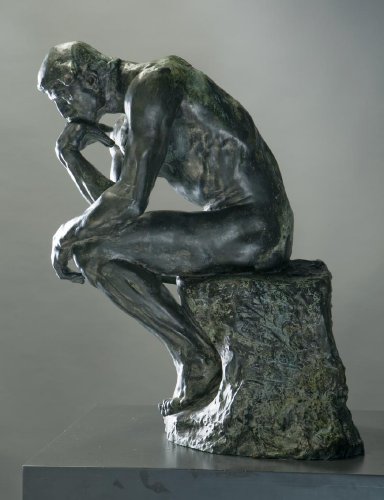
This video is really an excellent re-cap of all the different methods people have of treating the dead. The freeze drying and taxidermy methods were particularly interesting to me and he gives an excellent overview of plastination. The idea of being taxidermied into a position like a permanent high five, while morbid, seems awesome to me. Though I think I would want to be in the position of Rodin's Thinker.


I just can't quite get enough of this subject. The amount of things that you can do with remains is staggering and fascinating. Alas, the legal systems that be don't always allow for this sort of creativity. The end of the video covers the legal issues with these alternative methods of treating the dead and he does a much better job of discussing these issues than I ever could. Seriously watch the video.

Well thats it for me.


Monday, 11 February 2013

The Spaces In Between

I pulled through the imposing iron gates of the Royal Oak Burial Park and everything about being there seemed somehow undefinable. The clouds seemed on the brink of unleashing a down pour, the wind was cold (colder than it had been all winter) but there was no hint of snow or frost to be found and I parked as near to the gate as I could, not wanting to impose the clank and clatter of my beaten down old truck on the stillness of the graveyard. Not really wanting to cross the threshold of this place.


This problem with thresholds and barriers (dare I say liminal spaces?) persisted throughout the day. We came to the section we wanted to study but stopped at the edge of the road, not knowing where to step. There were no paths in the burial park and no indication of where the burials lay. Some of the stones faced East, others West but some had no regular orientation at all. Even within the sections themselves there was very little order. The neat North-South rows gave way to clusters (some around trees, others with no observable patterning what so ever). Barriers were everywhere but ill-defined.


Eventually, after a great deal of awkward smiles and shrugs of uncertainty one of my enterprising group mates took that first fateful step into the grass. The rest of us followed, acutely aware of where we were stepping. We were careful and respectful, trying to move between the monuments but still uncertain as to where we were actually walking. Eventually we came to the base of a large sequoia and decided to begin our work but were faced once again with a barrier. This time a circle of pine needles. The monuments were nestled in this bed of softly rustling foliage, some all but obscured by and others thrusting up defiantly from the brown carpet. 

Each barrier encountered was overcome and analysis proceeded but with each step further in I felt more and more like an outsider and I found myself longing for the liminal space once more. I began to think of how much more comfortable it would have been to stay on the road and take pictures of what I could see from there. Kneeling next to a grave marker under the spreading boughs of a sequoia seemed so personal. I tried to distance myself, to remain clinical by meticulously recording the inscriptions and sketching the sculptures but every now and again I would come across an inscription that read "A loving son", "Lost before his time" or perhaps most powerfully "lest we forget", and my barriers would fall.


As we were studying military monuments I came across a lot of "Lest we forget" and forget I could not. That is why I was unsure of where to step, where to kneel or even how loud to speak. I could not forget that these markers belonged to people, fathers, brothers, sons. I longed for distance but couldn't quite attain it and wound up in an undefined liminal zone. Half way between the personal and the clinical.


I wish I had a succinct conclusion to this post but I am still unsure about how I feel about this Monument Analysis Assignment. It was certainly a valuable experience and I glad that I did it but I can't quite shake the feeling that I intruded somehow, that I crossed too many boundaries and entered into a space I did not belong.


Tuesday, 5 February 2013

The Once and Reburied King

Today's lecture got me thinking, not only about the myriad of means we have of treating the dead but also about issues of consent and ownership of the dead and the recent discovery of the remains of King Richard III in Leicester, England really brought these issues to a boil in my head.

As I am sure many of you already know, archaeologist Richard Buckley uncovered the remains of a middle aged man believed to be Richard III in August of 2012 (http://www.bbc.co.uk/news/uk-england-leicestershire-21063882) and the recent mitochondrial DNA studies conducted on the bones and on the last surviving descendant of Richard's sister have confirmed what the archaeologists thought all along, it is Richard III.

This is of course a phenomenal discovery and highlights the amazing advances we (the scientific community and the human race) have made in DNA studies over the last several years. It is also an example of sheer blind luck when you consider that Michael Ibsen is the very last of Richard's lineage and so this confirmation was almost impossible.

More applicable to the question of ownership of the dead however is what happens next. The studies have been conducted and the results are more than satisfying so it is time to put Richard to rest once more. But where?

He was found in a shallow grave that was not even long enough to fit his body (http://www.bbc.co.uk/news/uk-england-leicestershire-21063882) and he shows signs of what the researchers called humiliation marks. Not exactly what you might expect for the grave of a king. But Richard III was killed in the Battle of Bosworth and his body was taken by his enemies (interestingly making him the last English king to die in battle) so a normal funeral and burial is unlikely.This undignified burial, combined with the humiliation marks seems to suggest that Richard's enemies wanted to shame him even in death. Now is where things start to get complicated.

 Normally a body is restored to its original position when ever possible but in this case the original site has been destroyed. Should his remains be reburied in the cemetery of the nearest church? In this case Leicester Cathedral. Or should another site be found. A CNN article (http://www.cnn.com/2013/02/03/world/europe/richard-iii-search-announcement/index.html) mentions that there were arguments for him to be buried with full honours in Westminster Abbey and still others argue that he should be laid to rest in York with the rest of his dynastic line.

A convincing argument could be made that he should be moved to York and buried with his family line as that is likely what would have happened if his body had been recovered by his supporters instead of his enemies. The argument for Westminster Abbey is less convincing and is aimed at giving him the honour a king "should" have. However, this honour was purposefully denied to him in the first place and he has no connection to Westminster Abbey.

 Ideally (in my mind) the body would be returned to its original position. Unfortunately that is impossible. Even if it were possible would it be done? After all, this is a king we are talking about. He was intentionally dishonoured when he was buried but reburial will almost certainly be accompanied by some sort of monument or ceremony and this would effectively nullify the underlying theme of punishment and humiliation that accompanied the original grave. What right do we have to change the story of this body?

Ultimately I suppose this case brings me to one of the central problems of archaeology. Objectivity. No matter how hard we try to remain impartial and scientific, as soon as we uncover something (be it clay pots or human remains) it immediately becomes part of our story and we become a part of its. Perhaps the sooner we accept this the better. But that doesn't mean I have to like it.

Sources and Links.

http://www.cnn.com/2013/02/03/world/europe/richard-iii-search-announcement/index.html
http://www.bbc.co.uk/news/uk-england-leicestershire-21063882
http://www.mirror.co.uk/news/uk-news/richard-iii-york-and-leicester-fight-1587917